
(This article by Ken Perrotte originally appeared in the August 2026 issue of Military Officer magazine.)
The roadside sign welcoming visitors to St. Michaels, Md., proudly declares it “The Town that Fooled the British.”
That’s a stretch, said local author Martin Bollinger, who is finishing his book, The Empire of Great Britain Versus the Town of St. Michaels. Drawing from American and British archives, letters, and official logs, his research suggests a more accurate motto: “The Town that Defied the British.”
Located on Maryland’s Eastern Shore, just over an hour away from Washington, D.C., and Baltimore, St. Michaels is known today for its waterfront views, boutique shops, and dining scene. But in the early 1800s, it was a thriving shipbuilding center, producing fast schooners favored by privateers and blockade runners.
[LIVE AND PLAY 2026: Destination Delicious]
To the British, nearby Baltimore was a pirate’s den. Ships sailing from the region regularly harassed the Royal Navy, prompting a blockade and British incursions into the Chesapeake Bay.
“There were two [War of 1812] campaigns in the Chesapeake, and in both cases, the orders were to cause panic and turmoil to force the Americans to pull their professional troops away from the Canadian border,” Bollinger explained.
The first attack came Aug. 10, 1813. Folklore claims townspeople hung lanterns in trees and ship masts, tricking British gunners into firing over the town. Bollinger said that story is false. The attack began at daybreak, and British forces could clearly see their target.
Defending the town were the local militia, known as the St. Michaels Blues, along with an artillery battery at Parrott’s Point and reinforcements from nearby Easton.
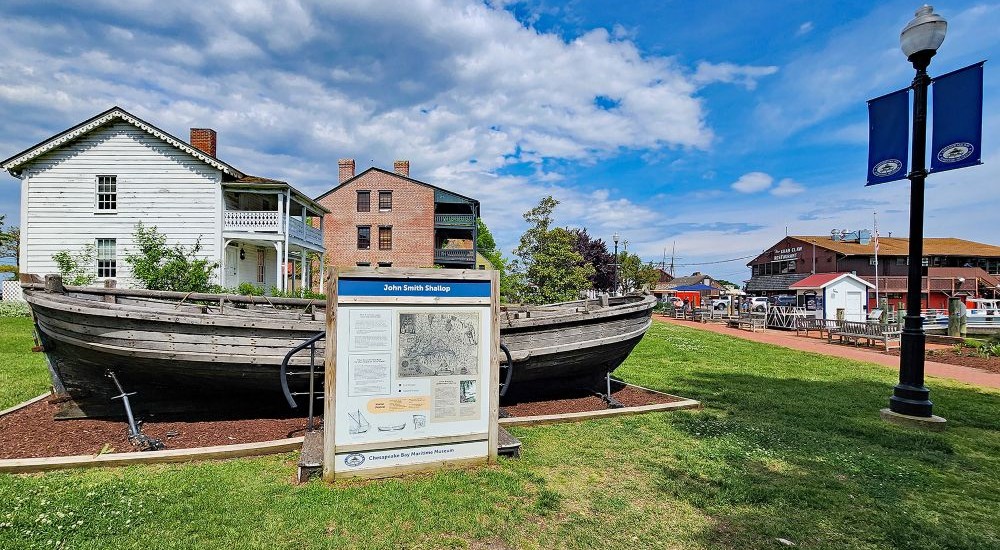
The Chesapeake Bay Maritime Museum features a replica of a shallop used by explorer John Smith. (Photo by Ken Perrotte)
A second assault followed on Aug. 26. This time, roughly 1,800 British troops landed several miles from town and advanced toward St. Michaels.
Facing several hundred determined militiamen supported by artillery, the British withdrew.
[RELATED: More Travel News, Reviews, and Deals From MOAA]
“St. Michaels is the only town along the Chesapeake that the British tried to attack twice,” Bollinger noted. “It was also one of the very few where the local militia was able to repel both attacks.”
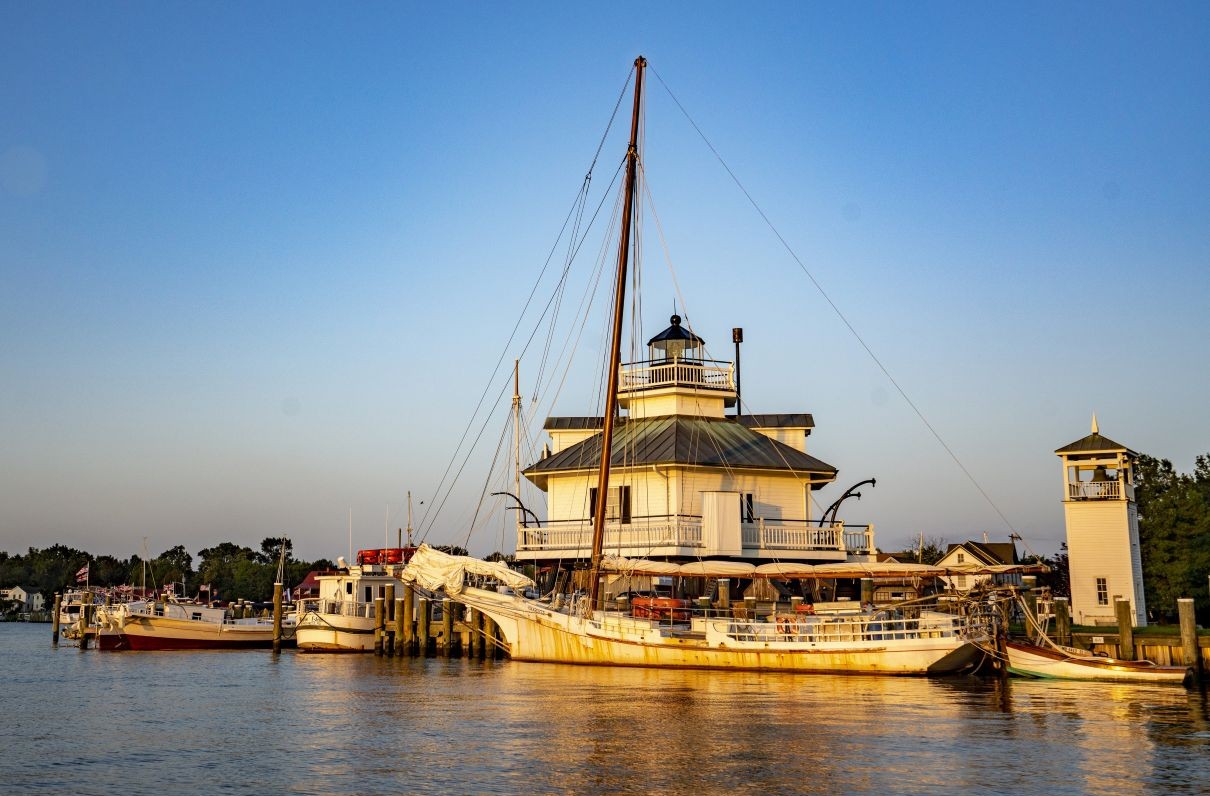
Today, visitors can explore that history at the Chesapeake Bay Maritime Museum, an 18-acre waterfront campus along the Miles River. According to the museum’s chief historian, Pete Lesher, St. Michaels was a one-industry shipbuilding town in 1812.
The shipbuilding economy declined after an agricultural depression in 1819, but St. Michaels rebounded after the Civil War through the seafood industry, particularly oyster harvesting and packing. Many historic homes downtown date to that era.
Today, visitors arrive for much more than history. They stroll Talbot Street’s boutiques, dine on Chesapeake Bay seafood, and charter sailboats and fishing trips. Combined with its rich War of 1812 heritage, the town’s maritime charm has helped make St. Michaels one of the Eastern Shore’s premier getaway destinations.
If You Go
For easy access to the museum, waterfront, and downtown, The Wildset Hotel offers boutique accommodations spread across several restored historic homes. Guests can enjoy a continental breakfast and a popular happy hour featuring baked oysters.
For a more upscale stay, the historic waterfront Inn at Perry Cabin offers kayaking, sailing, gourmet dining, and live music. The inn’s waterfront also appeared in the movie Wedding Crashers.
Ken Perrotte is an Air Force veteran and writer living in Virginia.
Military Officer Magazine
Discover more interesting stories in MOAA’s award-winning magazine.