
(This article by Hope Hodge Seck originally appeared in the October 2026 issue of Military Officer magazine.)
Earlier this year, Army veteran and college professor Jim Craig published an academic paper outlining, based on a literature review and interviews with veterans, what America needed from a memorial to the Global War on Terrorism. The 13-page paper considered the difficulty of capturing the meaning of a conflict that spanned generations and encapsulated two separate wars. It also distilled a few essentials, all of them variations on a theme: The memorial must be able to encompass many experiences and evolve as the country does.
“For the Global War on Terrorism Memorial to achieve its goals, it must be deliberately designed with a capacity to enable shared reflection, honor multiple perspectives and stories, and acknowledge new insights over time,” Craig wrote. “These actions are the essence of crucial engagement.”
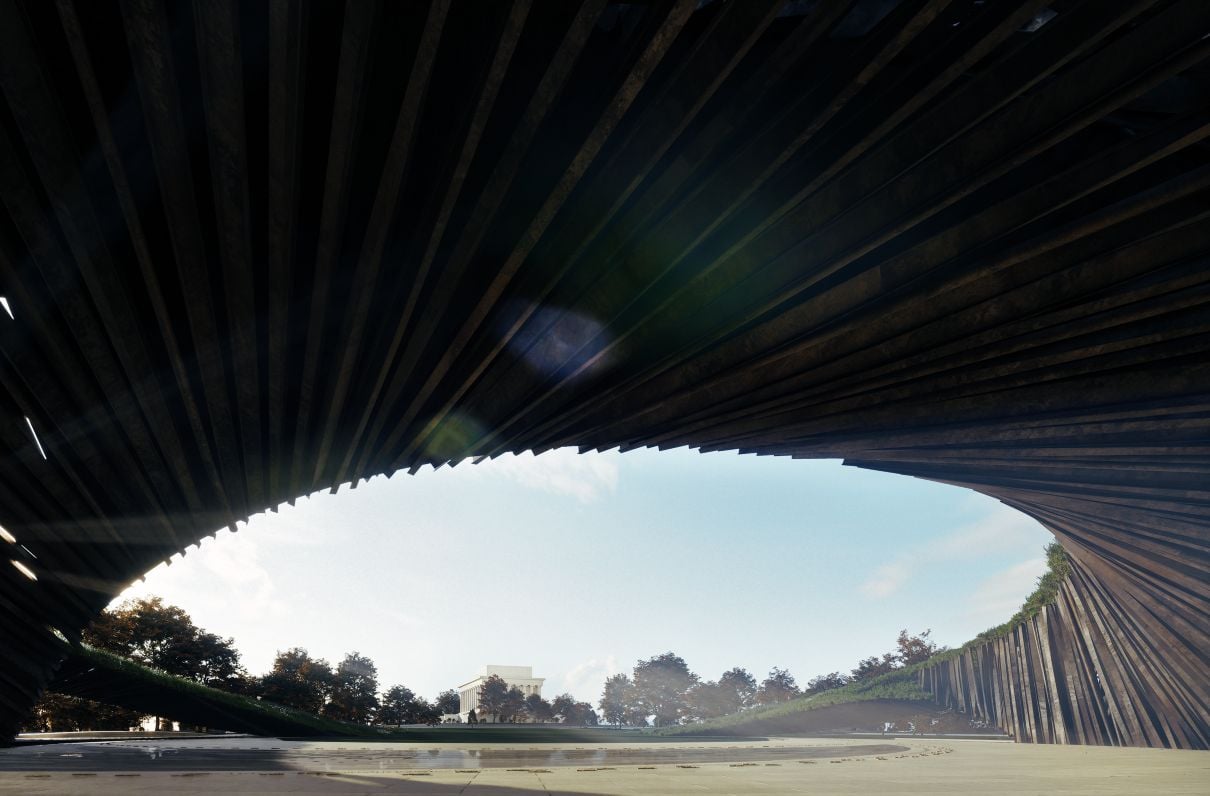
Just a few months after Craig’s paper was published, the Global War on Terrorism Memorial Foundation broke years of silence by releasing a long-awaited design proposal, featuring a Möbius strip-like steel arch covered in greenery, a shallow pool, and boot prints to honor the fallen.
Feedback was not positive.
Sen. Jim Banks of Indiana, who served in Afghanistan as a Navy officer, called the design “a disgrace,” saying in a letter to the president with two Republican colleagues that it lacked a clear narrative and recognition for those who died.
Former Navy SEAL Derrick Van Orden, a Republican congressman from Wisconsin, called it a “Jazz Hands monument” and an “abomination,” adding that the foundation was “on notice.”
Veterans took to social media to demand that the names of the fallen be added to the memorial as well as more recognizable symbols of the conflict.
What’s not immediately apparent in the design, though, is the more than decade of labor and hard-fought political battles behind it. The leader of the organization said the latest wave of backlash isn’t the end of the story. He plans to take on the new feedback and roll forward with an improved design — on an ambitious schedule — that will give veterans of the Global War on Terrorism a place to gather that they’ve lacked for more than two decades.
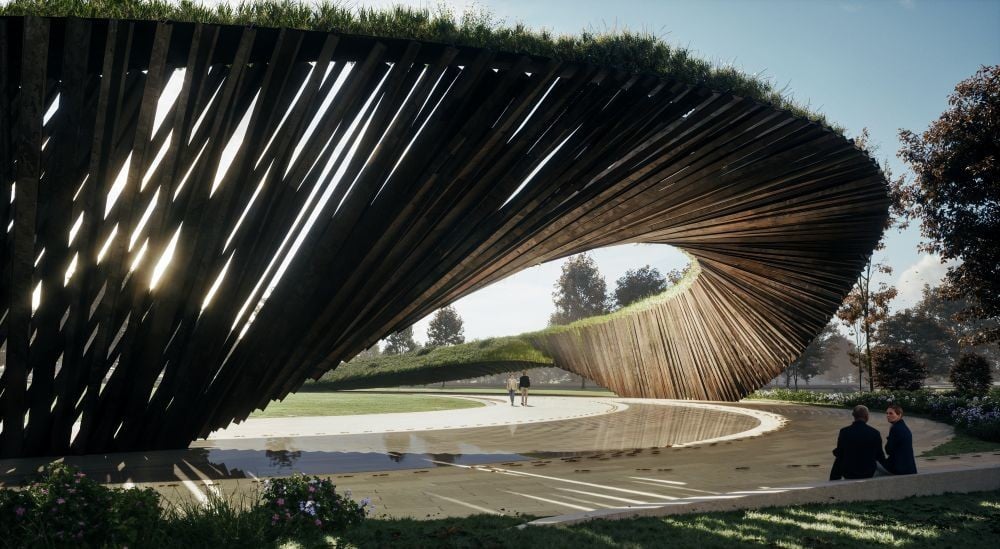
The design’s Möbius strip-like steel arch covered in greenery was among the features that drew rebukes from critics.
Clearing the Way
Foundation President and CEO Michael “Rod” Rodriguez is an Army special operations veteran with a piercing crystal-blue prosthetic lens in his left eye, a memento from his encounter with an IED in Afghanistan. Now in his 10th year with the foundation, he also represents the sprawl of the conflict, from the Sept. 11, 2001, attacks to the hasty final departure from Kabul, Afghanistan, in August 2021. He described standing at Fort Bragg, N.C., in 2017 to watch his son deploy with a quick-reaction force to Helmand province, a Taliban hot spot where he’d served two combat tours. He realized then, he said, there had been no other time in American history when two successive generations could ship out to the same place, to fight the same enemy.
Rodriguez was also deeply moved by the 2001 death of CIA officer Johnny Micheal “Mike” Spann at the start of the war, the first official American combat casualty in Afghanistan. Those two experiences, essentially bookending the conflict, “took my blinders off,” he said, and drove his passion to tell a comprehensive story of the war that wouldn’t exclude anyone’s experience.
None of that perspective on war, however, would prepare foundation leaders for the battle they had cut out for themselves in Washington, D.C. Plans for the memorial were blocked by two laws that would require hard-fought exceptions.
The first law, passed in 1986, prohibits the creation of war memorials until at least 10 years after the conflict has ended. When the foundation was formed in late 2015, the war was still ongoing and would continue for six more years. The second concerned the location of the memorial, designated for an area in the heart of the National Mall known as The Reserve. Congress in 2003 determined the space complete, barring the addition of any other monuments without a legislative exception.
Under the foundation’s creator and first leader, Andrew Brennan, Congress passed an exception to the timeline restriction in 2017. A law clearing the way for the memorial’s location on the Reserve — within a large parcel to the left of the Lincoln Memorial as it faces the Washington Monument — did not become law until 2021, after two years of lobbying and meetings with the National Park Service and other stakeholders.
Marina Jackman, a veteran Army officer who stepped into the role of foundation president and CEO in 2020 when Rodriguez took a leave of absence for personal reasons, recalled making “12 to 13” calls a day and canvassing Capitol Hill for support in two legislative sessions. Momentum started to shift, she said, when major veterans service organizations took up the call and sponsors like Mission BBQ got on board.
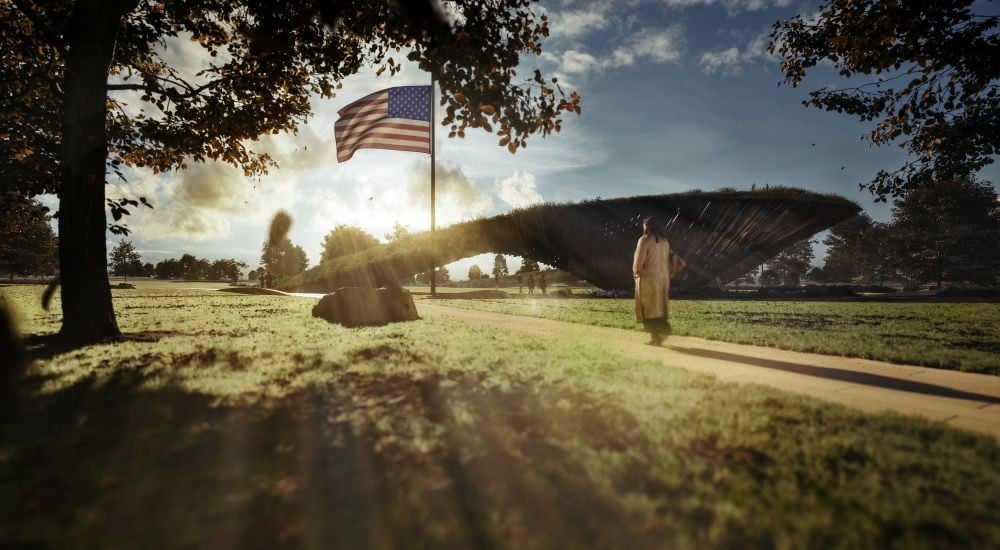
Along with design modifications, fundraising concerns remain a potential obstacle for the Global War on Terrorism Memorial.
“I definitely lost years of my life from that stress,” Jackman said, adding that she nonetheless considered her year at the helm of the foundation the honor of her life. “I still look back and I’m like: ‘Wow, I can’t believe it happened.’”
Rodriguez, who returned to helm the foundation in 2022, said he appreciated the process, arduous as it was.
“I’m glad it is this hard,” he said. “That’s our nation’s front lawn. It’s a sacred civic space.”
Designing a Place for All
With the legislative hurdles addressed, the foundation kicked off a “global search” for the project designer, Rodriguez said, using input from an advisory board populated largely by Global War on Terrorism veterans and Gold Star family members as well as a survey pushed out to veterans to guide decision-making. Survey data, he said, showed that water was a commonly desired design feature. Most respondents also wanted green spaces, according to released survey data, and a quiet, solemn space.
The foundation wanted a designer who would be flexible enough to take on feedback and work collaboratively, Rodriguez said.
“We need someone with ability, credibility, and humility,” he said. “Because one thing I have learned with previous memorial efforts is sometimes the designer will suck all the air out of the room. Or it can be very challenging if you have a designer who is not willing to adjust their design.”
Here, too, the process had false starts. The foundation initially selected Marlon Blackwell Architects in 2023 for the project, then cut ties to select Kengo Kuma and Associates, the memorial’s ultimate designer, in 2024.
Rodriguez said the initial firm had “some great contributions,” but that the decision to part ways was mutual.
The initial design concept, unveiled in June, aimed to honor all the desires of veterans and the military community. And the layers of meaning are not all evident at first blush. The steel arch, covered in greenery, is intended to serve as an amphitheater and gathering place, Rodriguez said. The footprints — some of them hollow, some of them filled, some representing women, men, and children — are intended to represent all contributors to the conflict, from those fallen in battle and veterans to civilians who served, children who grew up in the war and went on to fight, and even those lost to suicide following their service.
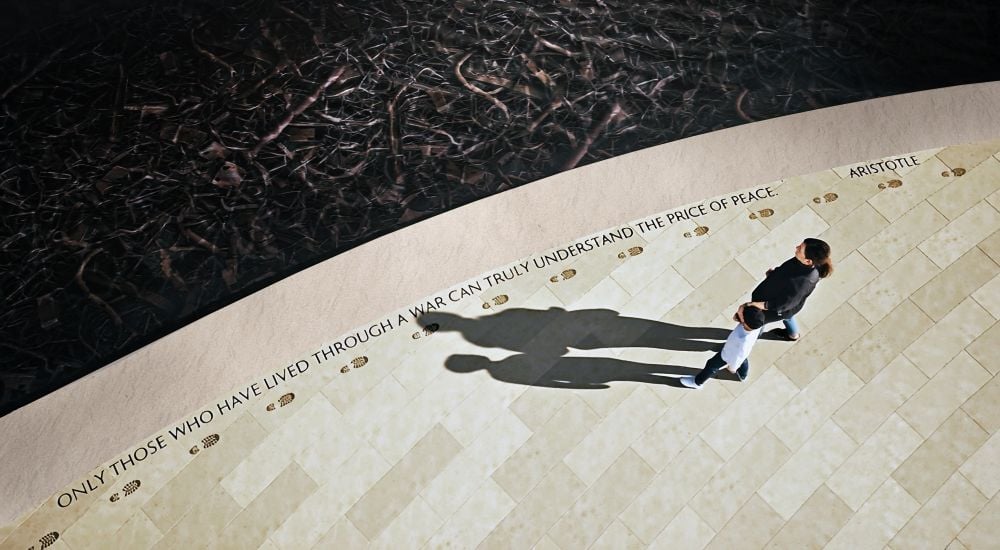
Footprints play a key role in the proposed design.
Relics of steel and stone from the Sept. 11 attacks are covered with living vegetation in what designers describe as “the embrace.”
While Rodriguez stressed that the design isn’t final — the foundation immediately launched a survey to solicit feedback for changes following initial criticism — he said the concept spoke deeply to him.
“It captured something that I didn’t know how to capture with words,” he said. “Particularly the unifying aspect of it.”
A Design Under Debate
Though critics of the memorial have been vocal and prominent, others have been more measured. George Chewning, a former Army infantry officer who served in Afghanistan and served as legislative director for the foundation from 2016 to 2018, said he “wasn’t thrilled” by the design proposal but noted that even the now-beloved Vietnam Veterans Memorial design had initially faced brutal criticism.
He said leaders had been emphatic from the foundation’s earliest days that the Global War on Terrorism Memorial would not feature names of the fallen because of the sprawling nature of the conflict and the difficulty of determining who to include. Decisions like these, Chewning said, should be communicated clearly to the public.
“I don’t think you can overcommunicate,” he said.
Jackman said she loved design details like the steel and the multigenerational footprints, adding she was “taken aback” at the initial backlash.
“Ultimately, I want nothing more than for them to be the ones that love it,” Jackman said of the veterans and Gold Star family members she’d heard from.
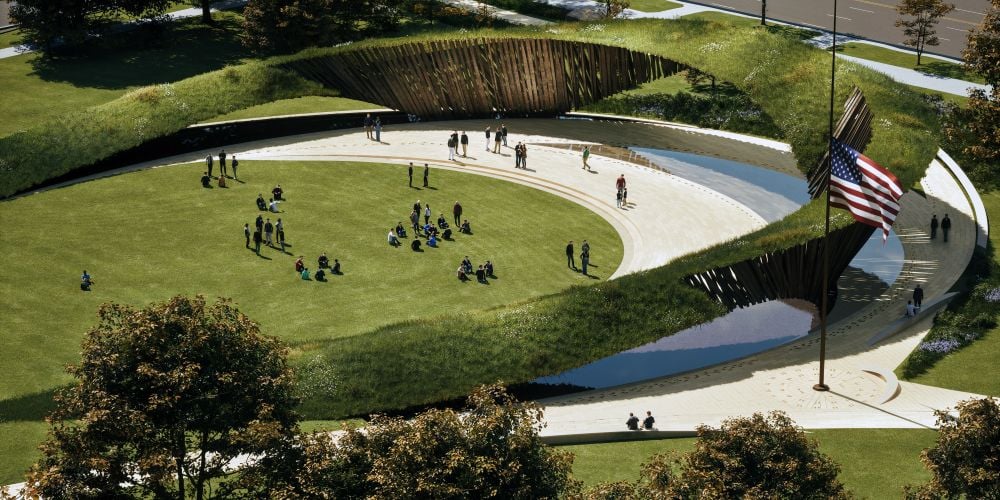
The proposed design would cover roughly 1 acre.
Gen. Joseph Votel, USA (Ret), a former leader of U.S. Special Operations Command who joined the foundation’s advisory board around 2022, said in emailed responses to Military Officer that the design “represents tranquility and peace and an opportunity to reflect on the immensity of the sacrifice of so many.”
The initial criticism, he added, was not unexpected, and he sees a path through listening and communication to arrive at a design that “speaks to the greatest number of those who served and sacrificed.”
“I am hopeful that the memorial will be a place that veterans and their families and the American public will be proud to visit, and when they do, it will be viewed as a location that demonstrates tribute to service, restoration, reflection, and unity of purpose,” he said. “I hope the location will continue to be a space where people can gather to honor, heal, empower, and unite.”
Craig, the author of the paper on what a Global War on Terrorism memorial should be, said he was heartened to see schematics of the memorial serving as a gathering space and appreciated that the proposal opted for openness over closed design, while also creating opportunities for interpretation rather than overdefining the war experience.
“It doesn’t essentialize service into one very specific, palatable way that people served, like some sort of special forces on a horse or something like that,” he said. “The vast majority of people who served in the Global War on Terrorism did not do those types of things.”
The Next Challenge
One hurdle still ahead for the foundation is fundraising. It will need to raise some $125 million in time to break ground on the memorial in 2027 and complete it by a targeted deadline of late 2028.
Lisa Benton-Short, a professor of geography at George Washington University and an expert on national monuments and memorials, noted that upkeep will likely be costly given the roughly 1-acre footprint, which includes water features and greenery.
Rodriguez said the foundation doesn’t want to hand the National Park Service “a nightmare to maintain” and that the plants in the memorial would be “organic to the space,” making their maintenance “absolutely minimal.”
When he spoke to Military Officer in June, he said the foundation had already received “seven-figure donations” in the critical early period following the design’s unveiling. He remains optimistic that the money will materialize and the final design will come together in the sprint timeline the group set for itself, and that veterans will come to feel a sense of belonging and ownership to the space.
“I really want [Global War on Terrorism] veterans to feel valued,” he said. “I want the nation to see them, and I want them to understand the cost. … I want them to see that because we don’t have a place to gather in our nation’s capital; there’s nowhere for us.”
Hope Hodge Seck is a writer based in Massachusetts.
Military Officer Magazine
Discover more interesting stories in MOAA’s award-winning magazine.