
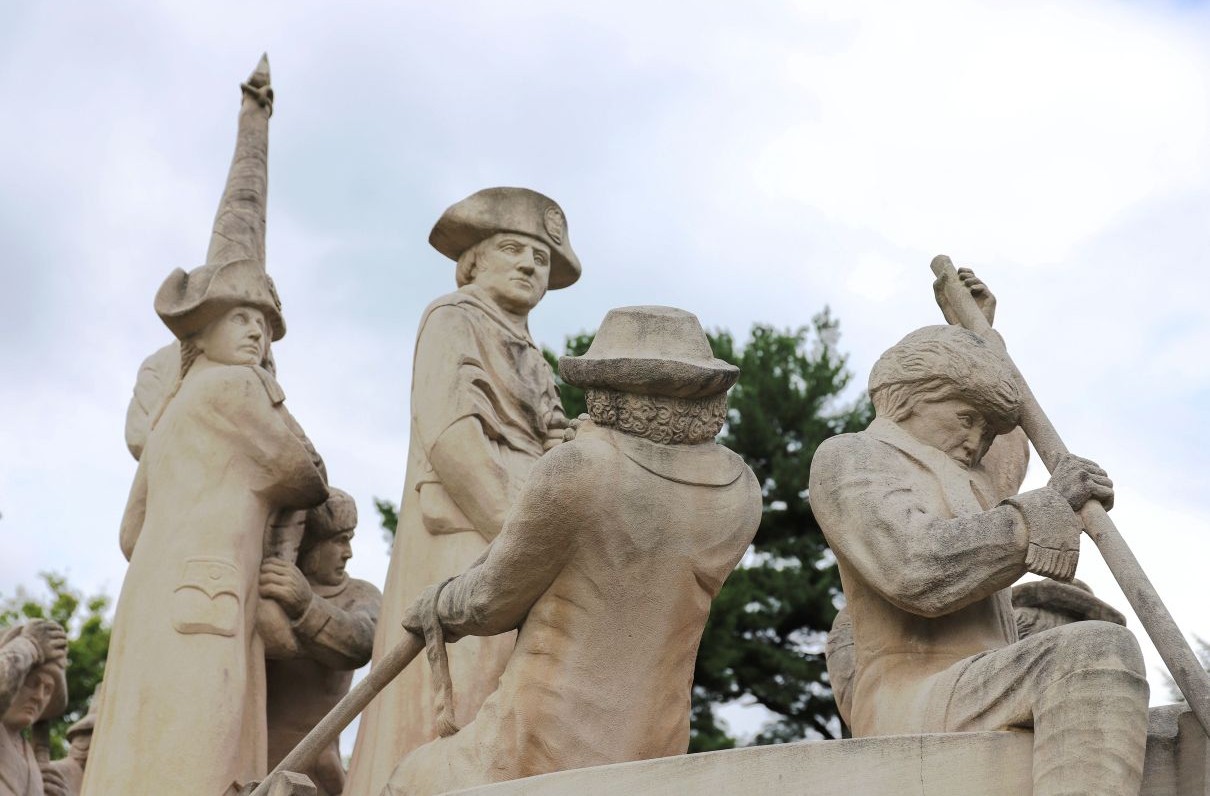
(This article by Lt. Col. Patrick J. Chaisson, USA (Ret), originally appeared in the December 2026 issue of Military Officer magazine.)
The Battle of Trenton, fought 250 years ago, dramatically altered the trajectory of the American Revolution.
On Dec. 25-26, 1776, Gen. George Washington led Continental soldiers across the Delaware River to attack a force of Hessians (German-speaking troops allied with the British) occupying Trenton, N.J.
This victory breathed new life into the revolutionary cause at its lowest ebb. By the final weeks of 1776, Washington’s army teetered on the edge of collapse. His weary, sick, unpaid, and poorly supplied men had been retreating for months, and their morale was almost nonexistent.
On top of that, many Continental soldiers’ enlistments were about to expire. Unless he moved quickly to revive their fighting spirit, his army might simply fall apart around him.
[MORE HISTORY: Behind the Blackened Canteen]
In late December, he devised a plan to help keep the revolution alive. Knowing his foe had established strongpoints throughout New Jersey, Washington resolved to strike one of them — an isolated enemy outpost along the Delaware River at Trenton.
Yet, the Hessians were well trained and ably led. To win, Washington needed to employ what is now known as asymmetric warfare — unconventional conflict where the relative military power, strategies, or tactics of opposing forces greatly differ.
Col. Stephen Harlan, USA, (Ret), the command historian for the U.S. Army Reserve’s 99th Readiness Division, told Military Officer that Washington “fought out of season” because professional armies of the 18th century, like the Hessians, habitually ceased active campaigning in the winter.
Harlan said Washington “defied these European conventions by conducting what we now call a raid on a fixed defensive point” amid a severe snowstorm. This high-risk maneuver leveraged surprise and the Continental soldiers’ superior battlefield mobility against an enemy that didn’t expect or prepare for winter warfare.
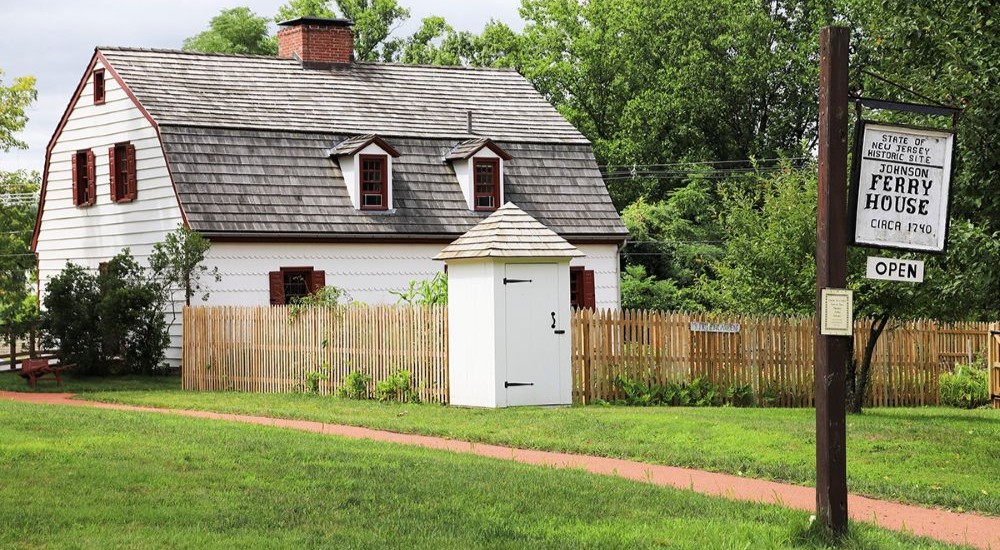
Washington and his officers likely used this site, a river ferry service at the time.
Recognizing he could not win a head-to-head battle, Washington instead adopted unconventional measures to exploit his enemy’s vulnerabilities. He concealed his intentions by creating a clever deception plan and enforcing tight operational security. Washington also counted on the Hessians to relax their vigilance as they celebrated Christmas.
After dark on Dec. 25, 2,400 Continental soldiers and several horses, along with 18 cannons and ammunition, embarked on boats and rafts to traverse the 300-yard-wide Delaware River. Before long, though, Washington’s strict timetable began to fall apart. The delayed arrival of several regiments, combined with the winter storm, hindered progress considerably.
The Continental forces eventually made it across and set out on their 10-mile march to Trenton. Splitting his command into two columns, Washington then launched a coordinated assault around 8 a.m. His attack caught the Hessians, commanded by Col. Johann Rall, almost completely off guard.
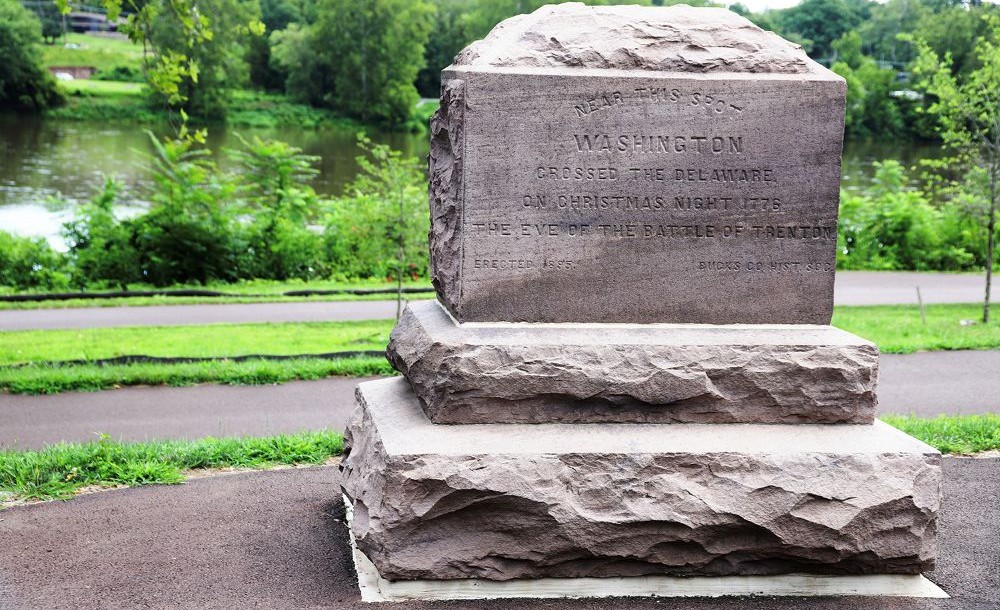
A stone marker, erected in 1895, commemorates the river crossing.
Although Rall’s men repeatedly tried to form a defensive line, Washington’s artillery and musketry fire quickly overwhelmed them. It’s unclear how long the battle lasted; some sources cite a 20-minute clash, while others estimate an hour or more. The battle resulted in a decisive American victory. Nearly 1,000 Hessians were captured, killed, missing, or wounded; Continental forces sustained only minor casualties.
Harlan, a Life member of MOAA, said the tactical victory at Trenton led to several significant strategic outcomes. Washington’s forces now held the initiative, he noted, and news of the attack ignited renewed hope for the revolutionary cause.
On the afternoon of Dec. 26, 1776, George Washington stood and watched his triumphant soldiers move Hessian prisoners and badly needed supplies out of Trenton. Realizing the shift in the balance of power, he turned to a nearby officer and declared: “This is a glorious day for our country.”
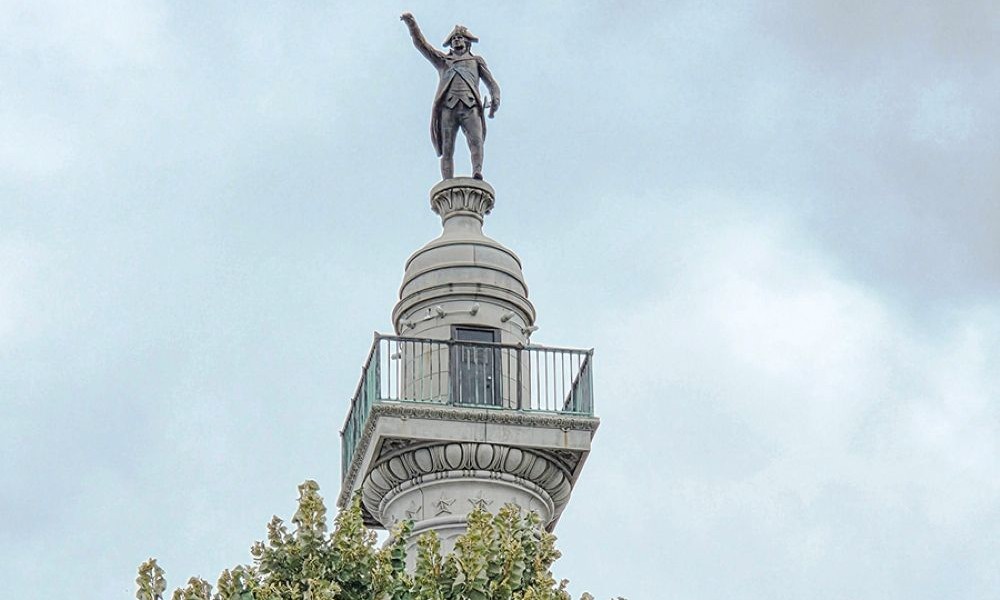
A monument to the Battle of Trenton was erected in 1893.
5 Facts About the Battle of Trenton
- There were two battles of Trenton, N.J.: one fought Dec. 26, 1776, and a second encounter (sometimes called the Battle of the Assunpink Creek) on Jan. 2, 1777. Both ended with an American victory.
- Washington’s plan called for three columns of troops to cross the Delaware River on Christmas night, but two couldn’t navigate the ice-choked river and turned back.
- Most of the Continental troops who crossed the Delaware River rode in Durham boats — large, wooden freight vessels that could each hold about 45-60 soldiers.
- Officers with the Continental Army who fought at Trenton included Capt. Alexander Hamilton and Lt. James Monroe, who suffered a near-fatal gunshot wound that day.
- Hessian Col. Johann Rall was mortally wounded in the battle. His remains rest in an unmarked grave outside Trenton’s First Presbyterian Church.
Lt. Col. Patrick J. Chaisson, USA (Ret), is a writer and historian in Scotia, N.Y.
Military Officer Magazine
Discover more interesting stories in MOAA’s award-winning magazine.