
(This article by Capt. Edward Lundquist, USN (Ret), originally appeared in the October 2026 issue of Military Officer magazine.)
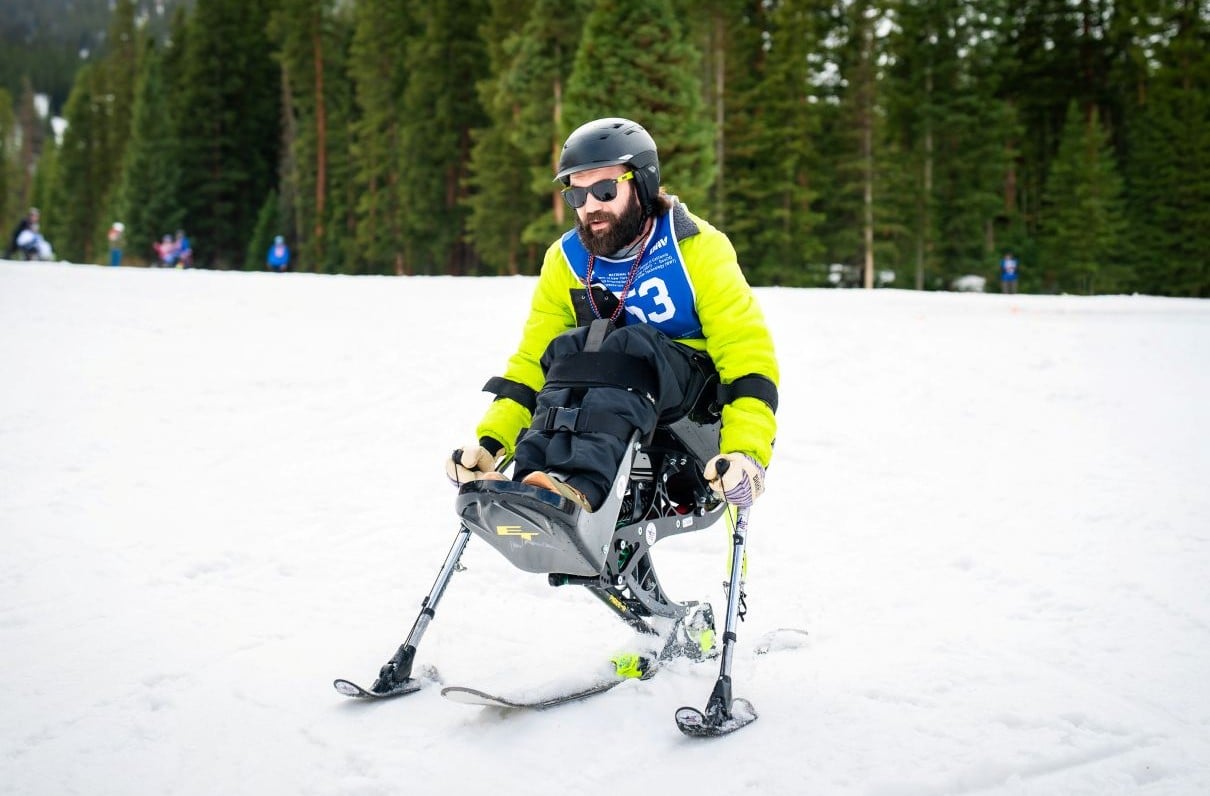
There’s nothing quite like skiing down a snow-covered mountain. While the sport can be physically demanding, adaptive programs across the country make it possible for wounded warriors and disabled veterans to experience the thrill of winter sports.
“There are many all-season sports that welcome disabled veterans,” said Rachel Huggins, program director for the Durango, Colo.-based Adaptive Sports Association (ASA). With the right equipment, instruction, and individualized techniques, “we’ve helped athletes with visual impairments, amputations, cognitive, and physical disabilities enjoy the stoke of sliding on the snow.”
ASA partners with adaptive ski programs nationwide, including those in California, Colorado, and Vermont. For disabled veterans, its programming is free, covering lessons, adaptive equipment, clothing, and lift tickets.
[DISCOUNTS TO DOZENS OF SKI RESORTS: Military Epic Passes]
“In most cases, the expenses are covered for athletes and their families and caregivers,” Huggins said. “It knocks down that financial barrier for a lot of folks, especially when it comes to travel and lodging, and we provide them with a community of people who understand the challenges.”
Many major ski operators, including Vail Resorts, off er adaptive programs at most of their mountains.
One of the nation’s best-known adaptive programs is the National Disabled Veterans Winter Sports Clinic, co-hosted by the VA and Disabled American Veterans in Snowmass, Colo.
Since 1987, the clinic has grown from 90 participants to nearly 400 veterans each year. Participants with traumatic brain injuries, spinal cord injuries, amputations, visual impairments, and other severe disabilities receive individualized instruction in adaptive skiing, sled hockey, snowmobiling, curling, and other activities.
Coast Guard veteran Dave Riley, a former rescue swimmer and now a quadruple amputee, credits adaptive sports with changing his life.
“When I woke up from a monthlong coma, looked down, and realized I was missing my arms and legs, I believed my purpose, my identity, and my capabilities had all been stripped from me,” Riley said. “I eventually learned how my illness and the resulting amputations were not a death sentence.”
Coleman Nee, who serves as the national commander of Disabled American Veterans, said the winter sports clinic has helped create thousands of stories about healing and renewed purpose — what he calls “miracles on the mountainside.”
“We urge all of our participants to push themselves beyond their perceived limitations, heal, and embrace the thrill and gift of life,” Nee said.
Capt. Edward Lundquist, USN (Ret), is a writer on military topics and travel.
Military Officer Magazine
Discover more interesting stories in MOAA’s award-winning magazine.