
By MOAA Staff
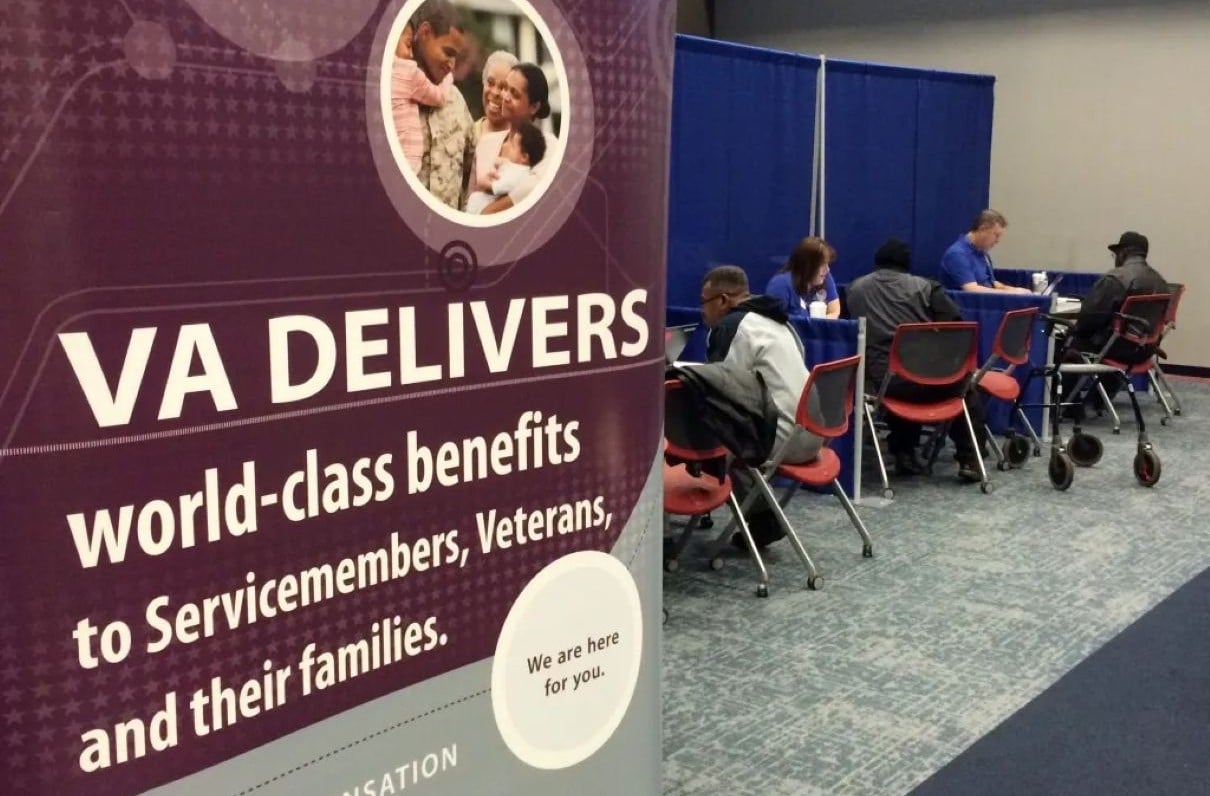
MOAA joined fellow veterans service organizations (VSOs) alongside state directors, federal leaders, and community partners at a recent conference covering the ongoing challenges that shape veterans’ benefits, health care, long-term care, memorial affairs, and transition assistance.
Cmdr. René Campos, USN (Ret), MOAA’s senior director of Government Relations, took part in a VSO roundtable at the annual conference of the National Association of State Directors of Veterans Affairs (NASDVA), held Aug. 9-12 in Savannah, Ga., with representatives from Disabled American Veterans, Veterans of Foreign Wars, Paralyzed Veterans of America, and AMVETS. Panelists covered legislative priorities and current advocacy campaigns, with the Take Care of America’s Veterans Act taking center stage.
[TAKE ACTION: Urge Your Lawmakers to Support the Take Care of America’s Veterans Act]
The measure has produced an active debate within the veteran community. Campos affirmed MOAA’s support for the bill and stressed the urgency created by the limited number of legislative workdays left in the 119th Congress.
With both chambers in recess and adjournment scheduled for Dec. 18, the fall congressional calendar will be demanding. MOAA continues to advocate for action on the omnibus veterans package and urges Congress to move meaningful bipartisan legislation forward.
A separate congressional roundtable with House and Senate Veterans’ Affairs Committee majority and minority staff members also focused on the bill. The discussion was engaging and candid, particularly regarding its proposed funding mechanism, and participants articulated their respective positions. Despite their differences, the panelists recognized significant work remained after the recess and expressed interest in collaboration and bipartisan progress.
State Directors’ Challenges
Throughout the conference, state directors emphasized several operational and policy concerns:
- State veterans homes need substantially greater access to VA construction grants and adequate reimbursement for complex care, staffing challenges, and expensive medications.
- Veterans continue to encounter inconsistent access to mental health beds, especially when civilian residential care requires travel far from home.
- Nonprofit veterans’ services vary widely in quality and availability.
- VA compensation and pension exams remain inconsistent.
- Medical records and other health information do not always transfer smoothly among VA medical centers, civilian providers, and state veterans homes.
- VA prescription and dental benefits can be disrupted when a veteran enters a state veterans home. Homes may not receive coverage for high-cost medications or dental services previously available through VA direct care.
[RELATED: Do You Agree With This List of Best States for Disabled Veterans?]
These concerns align with NASDVA’s priorities and many VSO advocacy priorities, which include increased State Home Construction Grant Program funding, improved appointment scheduling, better community care coordination, and continued oversight of electronic health record modernization.
VA Leadership
Deputy Secretary of Veterans Affairs Paul Lawrence framed VA’s mission around a simple theme: “Promise only matters when it is fulfilled.” The VA is working to keep its promise to veterans and their families by expanding benefits and care, Lawrence said – modernizing compensation examinations, restarting electronic health record modernization, and restructuring the Veterans Health Administration (VHA).
Lawrence also called on NASDVA members and conference participants to help locate veterans who are not connected with the VA. Finding those veterans, assisting individuals who received less-than-honorable discharges, and encouraging veterans to give VA another opportunity after a disappointing first encounter are essential parts of improving access.
Other key points from VA leaders during the conference:
VA Inspector General Cheryl Mason reported that, over the preceding 18 months, her office had uncovered approximately $2 billion in fraud across VA programs. She said the VA is changing faster than ever and that the Office of Inspector General is adapting by producing oversight reports more rapidly. Community care, medical billing and services, fiduciary programs, education and identity theft were identified as major areas of concern.
[RELATED: MOAA’s Scam and Fraud Prevention Resources]
Chief Veterans Experience Officer Dr. Lynda Davis discussed VA responses to disasters and ongoing efforts to improve information sharing with states. She also highlighted a key transition finding: Veterans are more likely to connect with the VA if they begin a relationship with the department before separation from military service.
Principal Deputy Under Secretary for Benefits Margarita Devlin reported that the Veterans Benefits Administration (VBA) processed more than 2 million claims during the previous year while reducing the disability-claims backlog and maintaining high accuracy rates. The VBA has conducted quality-control sprints to identify trends, strengthen employee training, make dependency and indemnity compensation payments more quickly, and simplify the disability claims form from 15 pages to four.
[RELATED: Average VA Disability Payments Rose Nearly 40% in Past 14 Years, Study Finds]
Participants also heard updates on VHA’s reorganization, which is intended to reduce bureaucracy and improve safety and access. Changes include reducing Veterans Integrated Service Networks (VISNs) from 18 to five, establishing health service regional areas, and piloting a 30-day hiring initiative to accelerate recruitment.
Conference presentations also covered the National Cemetery Administration, VA’s external provider scheduling system to improve access to community care, and mental health and suicide prevention services.
Keeping the Promise Through Action
The conference reinforced a central message: Serving veterans requires coordinated action across federal agencies, states, VSOs, health care systems and community organizations. MOAA will continue working with NASDVA; federal, state, and community leaders; fellow VSOs; and Congress to advance timely access to VA health care, benefits, and necessary resources to veterans, servicemembers, their families, caregivers, and survivors who earned them through service and sacrifice.
Use MOAA’s Legislative Action Center to urge Congress to support the Take Care of America’s Veterans Act and turn years of advocacy into meaningful results for veterans and their families. The legislation will allow our nation to keep its promise to those who serve and have served.
When MOAA Speaks, Congress Listens
Learn more about MOAA’s key advocacy issues, and contact your elected officials using our messaging platform.