
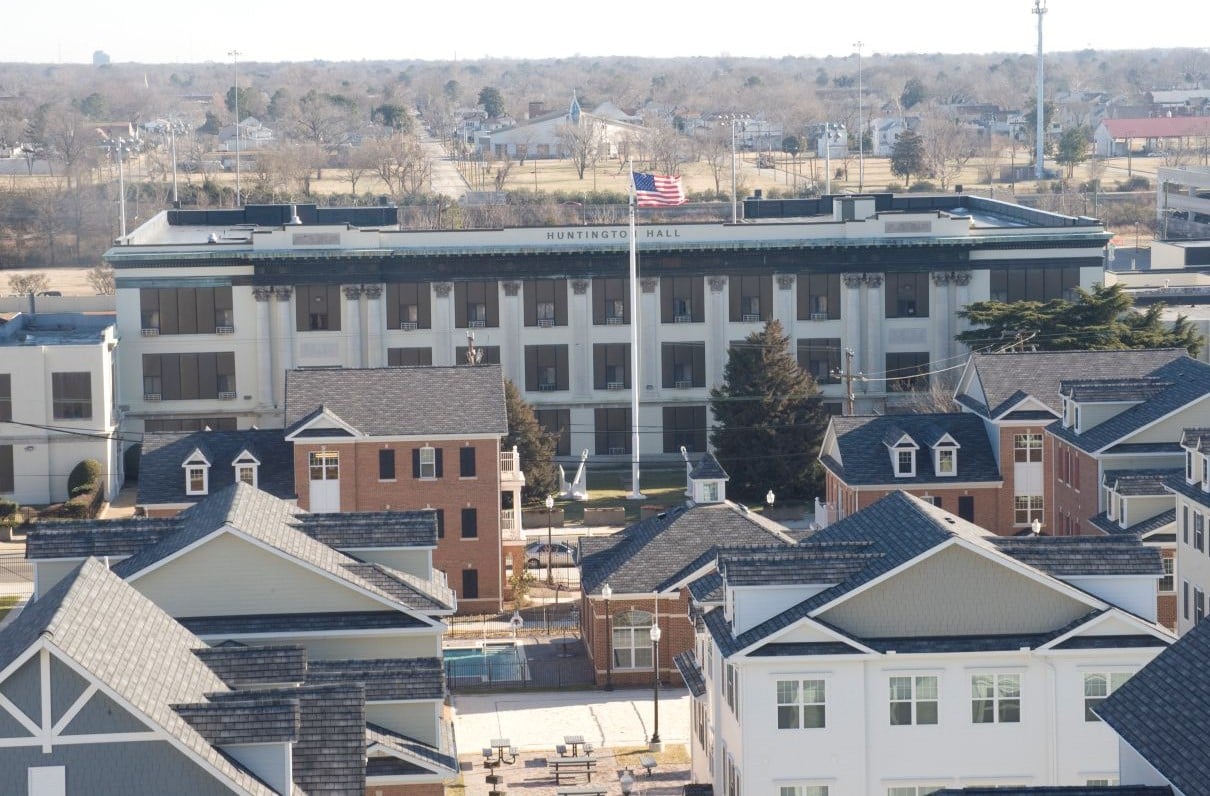
Two years after MOAA raised concerns about proposals to privatize military barracks, the Navy announced it will move forward with a $1.7 billion public-private venture that will reshape unaccompanied housing for thousands of sailors in Hampton Roads, Va.
The Navy announced last month that it reached an agreement with Hunt Military Communities to construct or renovate housing covering more than 8,000 beds in Norfolk, Virginia Beach, and Newport News over the next five years. The effort represents a dramatic expansion of privatized unaccompanied housing and could provide a model for similar projects elsewhere in the military.
Servicemembers deserve safe, modern, well-maintained housing, and years of deferred maintenance have left too many living in unacceptable conditions. However, ongoing issues with privatized family housing raise concerns about expanding the model to barracks.
As Congress and the Pentagon considered expanding privatization to unaccompanied housing, MOAA warned against treating private-sector financing as a shortcut around decades of inadequate investment in military infrastructure.
[FROM 2025: Top Enlisted Marine Talks Barracks Improvements With MOAA]
What the Navy Is Planning
Under the Hampton Roads agreement, Hunt Military Communities will take responsibility for thousands of beds across the region. Navy documents describe plans to renovate existing facilities at Naval Air Station Oceana, Joint Expeditionary Base Little Creek-Fort Story, and Naval Station Norfolk while constructing new housing near Newport News Shipbuilding.
The Navy says the five-year plan will construct or renovate 8,098 beds and save taxpayers more than $325 million through the use of private capital. Navy officials also say the arrangement will increase funding available for long-term housing sustainment by 400%.
The need is particularly acute in Hampton Roads. The Navy is working to move junior sailors out of shipboard living arrangements when their ships are in port, while also addressing housing shortages for sailors assigned to vessels undergoing lengthy maintenance periods. The project will include 1,500 new beds in Newport News, replacing the aging Huntington Hall, WHRO reported.
Privatized Housing Background
Congress created the Military Housing Privatization Initiative in the 1990s in response to deteriorating government-owned family housing and insufficient appropriations to replace it. Private capital allowed the Pentagon to modernize housing far faster than traditional military construction could accomplish.
[RELATED: MOLD Act Would Protect Military Families From Hazardous Living Conditions]
The Navy points to that leverage as one of the strengths of its public-private venture program. According to Naval Facilities Engineering Systems Command, Navy and Marine Corps privatized family housing projects generated approximately $9.8 billion in initial development from about $1.5 billion in government investment.
Serious health, safety, maintenance, and accountability problems in privatized housing across the Services ultimately prompted congressional investigations and reforms, including new tenant protections. MOAA has repeatedly raised concerns about a fundamental weakness of privatization: Once the military enters into a long-term partnership, commanders do not necessarily have the same authority to fix housing problems that they would have over government-owned facilities.
Servicemembers must be able to trust that their chain of command has both the authority and resources to address unsafe or unacceptable living conditions. That concern becomes even more consequential when the residents are junior enlisted servicemembers living in barracks.

Resources for Currently Serving Officers
MOAA can help you succeed in your military career and beyond.