
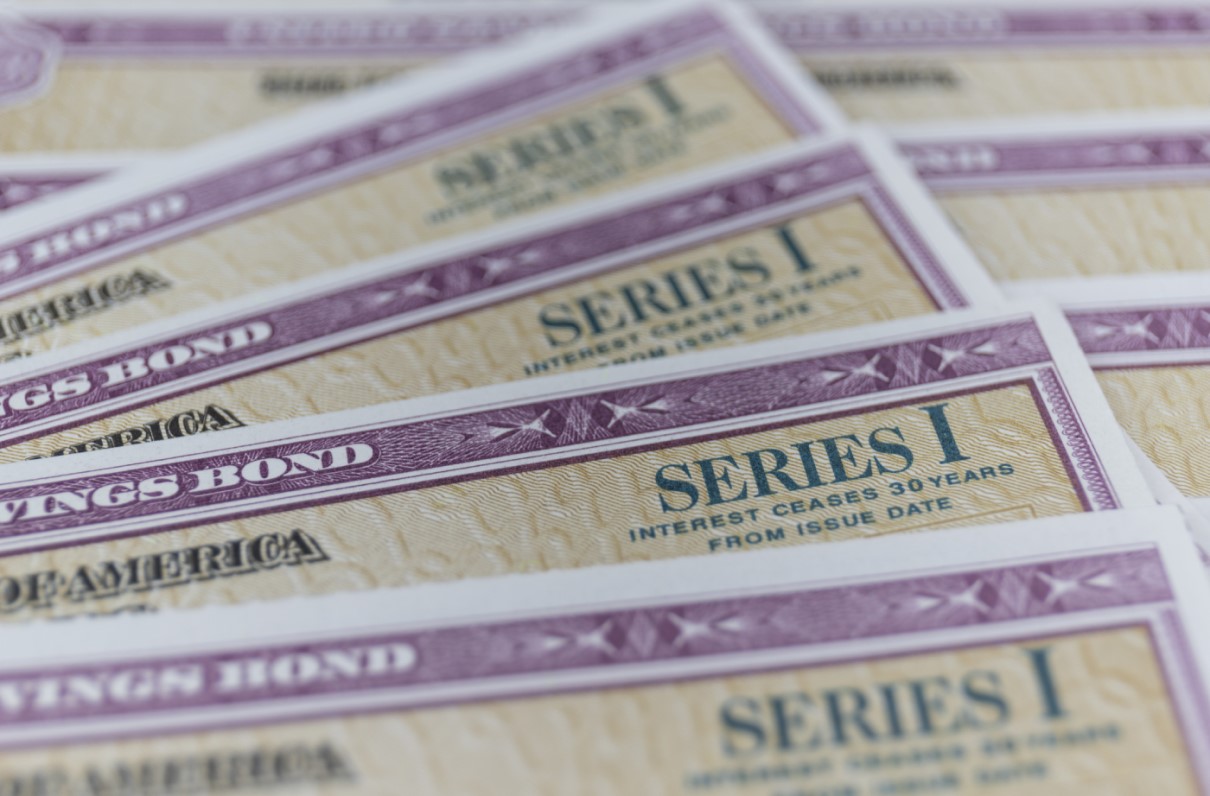
Series I savings bonds, a Treasury-issued hedge against inflation, have been around since 1998, but they became a popular investment vehicle as inflation spiked in the early 2020s. When the I bond variable rate hit 9.62% in 2022, eager investors crashed the TreasuryDirect website.
[RELATED FROM MOAA: All About I Bonds]
As inflation eased, I bond rates dropped significantly. They have rebounded recently, however: The latest rate, which applies to bonds issued May 1 through Oct. 31, is 4.26% -- a composite rate made up of a fixed rate (0.90%) plus an inflation rate. The fixed rate stays in place for 30 years from the bond’s purchase date. The variable rate, which is based on inflation, changes every six months.
The overall rate represents nearly a quarter-percentage-point increase from the November 2025 rate announcement (4.03%). It's the highest composite rate since the 4.28% rate from May 2024.
The new figure is competitive with many certificate of deposit (CD) rates as of mid-May and may be slightly higher than most high yield savings accounts.
MOAA does not provide financial planning services, nor can we offer specific guidance for individual investment decisions. However, many MOAA members already have “a strong inflation hedge” thanks to inflation-adjusted retirement pay and VA compensation, said Daniel Kopp, MA, MS, CFP®, MQFP, founder of Wise Stewardship Financial Planning.
In these instances, buying I bonds “is probably less important for them than for traditional retirees,” said Kopp, a MOAA Premium member. “It comes down to their specific beliefs about future inflation changes. For people that have smaller net worths and more exposure to inflation … the I bonds could be a great part of their savings bucket strategy.”
I bonds are not taxed at the state level, Kopp noted, which could be an advantage depending on an investor’s state tax laws.
[RELATED: MOAA’s Military State Report Card and Tax Guide]
If you’re considering cashing in your I bonds, make sure you understand your options and, more importantly, the rules.
I Bond Basics
You must hold your I bond for at least 12 months after purchase. If you cash in the I bond within five years of purchase, you lose the last three months of interest on the bond.
[RELATED: MOAA's Financial Calculators]
I bond interest rates change every six months because the variable inflation rate is pegged to the Consumer Price Index (CPI). The rate change is announced twice a year – in May and November (see historic rates here), but note that each investor has their own six-month reset window.
For example, if you purchase an I Bond in July, your interest rate will stay whatever it is on the date of purchase for the next six months. The Treasury may announce a new interest rate in November, but your interest rate won’t reset until January.
If you’re looking to cash in, this information will help you decide when to do so: If a new, lower interest rate gets announced, you’ll want to check your purchase date to make sure which month your interest rate is resetting to the lower rate. Otherwise, you might cash in too soon and lose the last few months of the higher rate.
Ideally, you want to cash in three months after your I bond’s interest rate drops so the three months’ worth of interest you lose is at the lower interest rate. It’s also better to cash in at the beginning of a month, because interest is computed and added at the end of the month. If you cash in close to the end of a month, you will lose that entire month’s interest.
[RELATED: Thrift Savings Plan Rule Change Aimed at Spurring Savings Growth]
You can see your I bond’s current value and interest rate in your TreasuryDirect account. If your I bond is less than five years old, the values shown do not include the last three months of interest.
To cash in an electronic I bond, navigate to ManageDirect in your account and use the link for cashing securities.
Savings bond interest is subject to federal income tax the year you cash in, but not state or local income tax. You will receive an electronic 1099-INT in your TreasuryDirect account by Jan. 31 of the year after you cash in. If the bonds are used to pay for higher education, you may avoid paying taxes on the interest, but there are income and other restrictions.
This article was originally published in December 2023. Last update: May 15, 2026.
Member-Exclusive Publications From MOAA
From navigating your finances to managing your benefits, these downloadable guides are available to PREMIUM and LIFE members.
Not a member? Click below to learn more about joining MOAA or upgrading your membership.