
Today's Officer MOAA - One Powerful Voice
MAY 2008
Quick Search

 
Online Sections

Magazine


Military


>Something for everyone
>Return on investment
>Virtually endless possibilities
>The ‘Link’ Between War and Games

>>Related: More Than a Game

 Printable version
E-mail this article to a friend!  Email article
SoftWARe

By Eric Minton
Summer 2005 Print
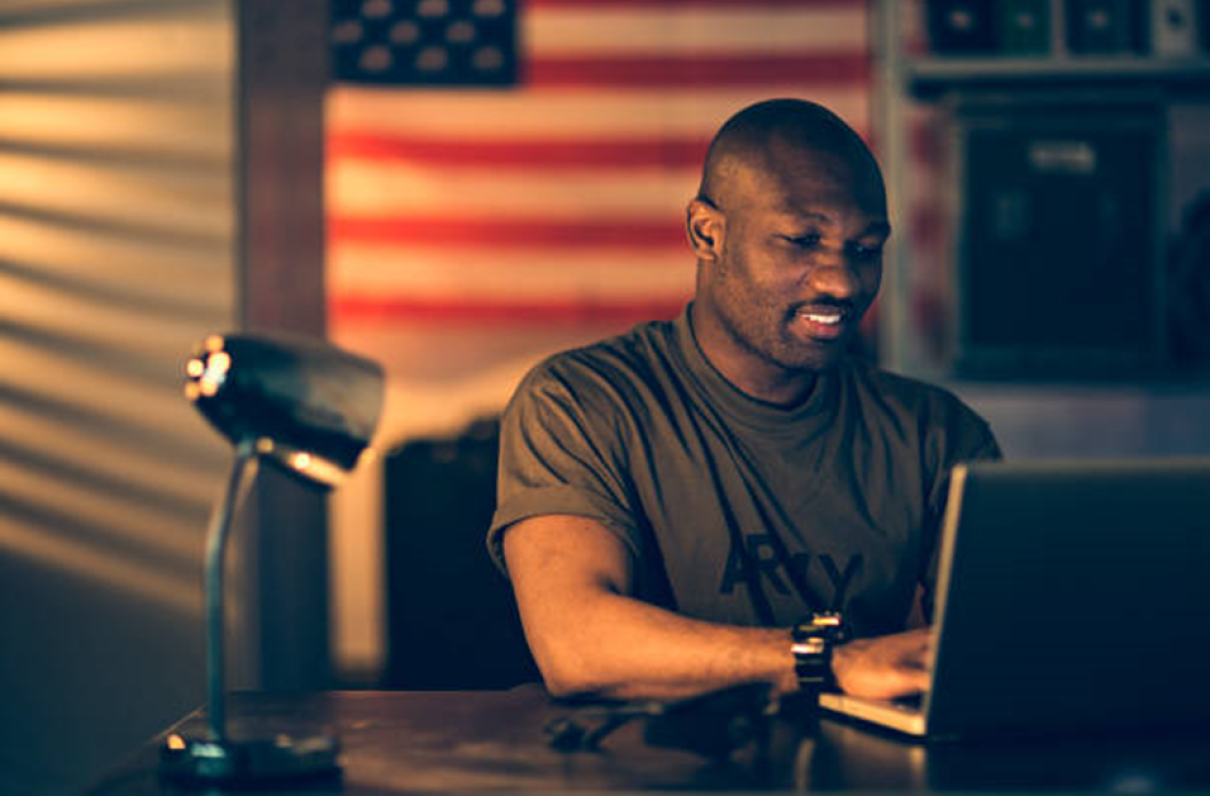
Servicemembers are being introduced to a new type of military training: video war games.

Here’s something no parent wants to read: Video games can make you smarter. Not that you should let your kids spend six hours in front of a computer or Xbox playing virtual warriors, but when video games use real-life scenarios, include constant feedback and ratings, and meld with an overall training regimen that includes book study and live experience, they make for a wiser and more adaptable individual and team player.

That is what the U.S. military is discovering as each branch embraces video games and gaming technology in its training regimen. This is more than just catering to a generation that grew up with the joy of joysticks instead of toy soldiers and teddy bear tea parties. This is a trend driven by available technology, budget constraints, gaming’s effectiveness in developing social and cognitive skills, and, well, a generation of young soldiers, sailors, Marines, and airmen who have known the joy of joysticks all their lives.

“Frankly, every 18-year-old has played a video game,” says Michael Macedonia, chief technology officer for the U.S. Army’s Program Executive Office for Simulation Training and Instrumentation (PEO STRI) in Orlando, Fla. “Every 18-year-old coming in the Army knows how to read, too. This is just another technology [Army training] can take advantage of.” He says Army schools once played Avalon Hill battle board games, too. “The bottom line is we will do anything so that we don’t have to train through blood.”

Virtual blood also is part of video-gaming culture, which brings us to the tricky definition of “gaming” technology. For the military, it’s the ability to use the latest bells and whistles—meaning special effects and interactive graphics. And with the Internet, games can be played simultaneously by participants in classrooms, on ships, on aircraft, and in bunkers. “We define what a game is by the emotional response in a player,” says Rosemary Garris, a research psychologist with the Training and Human Performance Research and Development Branch at the Naval Air Warfare Center Training Systems Division in Orlando, Fla. Some of this she describes as the “silliness factor”: the player hits a target or right answer and gets an explosion or noise as a reward. Games also track performance measurements, Garris says—i.e. keep score.

Given these fun responses, the tug at our competitive natures, and the ever-improving graphic displays—everyone interviewed for this story, from instructor to engineer to Marine colonel, used the word “cool” at least once—games have an advantage over other media in a training curriculum in that they captivate and motivate the students. Games are not always about fun: think of the seriousness with which the military always has used that word, as in “war games.” Thus, the primary purpose of video games in training is to improve cognitive and decision-making skills. Although some games and simulator programs teach manual procedures and dexterity, the majority of those used by the military are mental games.

Military video game developers therefore make sure the experience is about handling a scenario rather than winning. “One of the potential drawbacks to using gaming technologies is that instead of the learning points and proper tactics, techniques, and procedures you are trying to get across, [the student] wins by knowing how the game works,” says Michael Woodman, project manager for the Marine Corps Tactical Decision-Making Simulations (TDS). So when developing video games for military training, “We don’t allow cheat codes.”

Something for everyone

The services work with established game developers, such as the Institute for Creative Technologies at the University of Southern California, Forterra Systems Inc., and BreakAway Games, to customize the games for their specific training needs. One such game is the Army’s version of one of the most popular games on the Internet, Full Spectrum Warrior, a 3-D strategy game in which the player maneuvers an infantry squad. “You don’t fire your weapon, you have to fire the squad,” Macedonia says. “You have to be successful in the mission, not lose any people, and follow the rules of engagement.” The Army also is developing a project called the Asymmetric Warfare Environment, a massive database server containing myriad 3-D virtual worlds that can be networked with personal computers and laptops anywhere in the world. “People can [train together] whether they are in Tikrit [Iraq] or Alabama,” Macedonia says.

A new version of the Marine Corps’ Close Combat: First to Fight takes the artificial intelligence quotient a step further by giving all virtual members of the fire team abilities known as “Ready-Team-Fire-Assist.” Instead of the players micro-maneuvering the members of their teams, those members automatically engage in mutual support tactics, “just like a real Marine would,” Woodman says. “So, the fire team leader can focus on his responsibilities as a team leader, focus on the commands he needs to give when they are called for.” The game could be set to a multiplayer mode, too, with other Marines maneuvering team members. The Marine Corps also is developing an anti-terrorism TDS in which players conduct real-time strategy from a third-person point of view, and Joint Terminal Attack Controller (JTAC), which provides a first-person point of view to a developing battle. The two games will be interoperable so that a platoon commander can maneuver forces using the anti-terrorism TDS while those forces, using JTAC, actually engage in the virtual battlefield. First to Fight even will be layered into the system. “It will enable us to work back and forth across the levels,” Woodman says.

The U.S. Air Force is using such networking capabilities to create a Distributed Mission Operations system, which hooks up different flight simulator sites around the world so various crews can train together. This will allow virtual training of four-ship formations with other four-ship formations, with AWACS (airborne warning and control system) and with JSTARS (joint surveillance and target attack radar system), and eventually with forward ground controllers—all without spending an ounce of jet fuel.
On a much simpler level of technology, the syllabus for the Air Force’s T-38 pilots in training at Randolph AFB, Texas, now includes a video game put together by Andrew Ranft, program manager for T-38 Courseware at Air Education and Training Command Headquarters. With cockpit graphics and audio feedback, the hour-long game is intended as a refresher test on T-38 emergency procedures and operating limitations before the pilots’ check flights. The four-part format is based on popular television game shows — Jeopardy, Wheel of Fortune, Who Wants To Be a Millionaire (rise in rank from cadet to chief of staff by answering questions: A wrong answer ends the game with the computer emcee saying “You are dismissed!”), and Hollywood Squares (in which an assembly of nine cartoon characters from a crusty old instructor pilot to a retired sr-71 pilot give answers that might or might not be correct).

In the Navy, submarine trainees take a Virtual Interactive Shipboard Instructional Tour, a scavenger hunt to get students acquainted with the ship. The game is being expanded to include other types of vessels. Submariners also undertake training while under way, and because submarines don’t have room for full-scale simulators, sailors use laptops to play the Submarine Skills Training Network featuring periscope and equipment simulations. With the latter, Garris says, the Navy is incorporating gaming elements, such as vivid color, dynamic sequences, and various feedback and effects. “Our theory is if you put the right components in, hopefully you can create those emotional responses in players that would encourage behaviors you want in students,” she says. In tests, students who used the simulators with game components scored better than those students who used the more traditional training.

This is a rare instance of researched data showing the cognitive benefits of video games in training regimens. More prevalent is anecdotal evidence endorsing video gaming’s effectiveness. Marine and Army officials say informal surveys indicate that infantry units practicing on computers performed better in live training than units that had not gone through virtual training. “You get over the rough learning points in a very inexpensive manner,” Woodman says of video game training. “When you go to live training you’re past the little stuff, and the training you can do there is more advanced. Those Marines who spent a week with us [on TDSs] going into the field were better trained than Marines that had already spent two weeks in the field.”

Cost-effectiveness, as much as cognitive-effectiveness, is a major part of the equation in video game training and simulation. “Live field training is very expensive in terms of time, support, ranges, fuel, ammunition, the whole gamut,” Woodman says. Consider the cost of Military Operations in Urban Terrain training. In live training, a unit could perform perhaps three evolutions “on a good day,” Woodman says. On computer, that unit can do up to 40 evolutions, honing skills through repetition and feedback. The computer also can introduce a variety of iterations and terrain, something not possible in a live setting. “That is not to say these games will ever replace live training; we design them to augment live training,” Woodman says.

“For the true experience, you can’t do any better than doing it for real, doing it live,” says Col. Walt Augustin, program manager for Training Systems, Marine Corps Systems Command in Orlando, Fla. “But, I would submit that you can learn certain skills faster on a game because you can go through it quickly [and] repetitively and get immediate feedback.”

Return on investment

Saving money has been the inspiration behind flight simulators since the 1930s (see “The ‘Link’ Between War and Games,” above); a student pilot who makes a mistake in flight can destroy an expensive aircraft, but the best way to practice avoiding fire is via simulation. “We don’t like to shoot missiles at our good airplanes,” says Mark Adducchio, director of engineering for the Simulator Systems Group, Agile Combat Support Wing at Wright Patterson AFB, Ohio. “You’re actually flying against perceived enemy aircraft and ground targets you can’t really do without simulation. We strive to make our pilots sweat in our simulator cockpits.”

Macedonia speculates that the Army turned to simulation training after the Vietnam War because those soldiers were poorly trained for the type of combat they encountered and the all-volunteer Army now made proper training a smart investment. “We were now actually investing in human capital. That was a big attitude change,” he says. “So, the expenses that went into flight simulators [in the Air Force and Navy] went into training simulators [in the Army]. What we’re trying
to do in training is to create virtual veterans. We want soldiers to years later remember a simulation and go, ‘That was an awful experience.’ ”

The military did not jump into the video game field until commercial companies, developing games for consumer entertainment, had developed the technology enough so the military services could afford to co-opt it. “As the technology improved, we were able to drive cost down,” Macedonia says. The Navy hopes to further drive down the cost of video-game training by developing a gaming engine through open-source technology, downloading bits and pieces of technology from the Internet. This would avoid licensing fees, says Curtis Conkey, principal investigator for the Naval Education and Training Command Personal Computer Simulation Experimentation Lab in Orlando, Fla. “In [DoD] a lot of technology has already been used for the high-profile simulators,” Conkey says. “There’s a whole layer below that of less critical trainers that still needs to be built, has less budget, and can’t afford a commercial gaming solution or the recurrent licensing fees of gaming.” The engine is being built at www.delta3d.org.

Virtually endless possibilities

The technology, which has come a long way in the 10 years since a couple of Marines adapted the coding of the game Doom to make it relevant to Marine Corps training, still is advancing. “We’re going through changes as we speak,” says Augustin, referring to both the technology of video gaming and the acceptance of incorporating video games into military training. “Advocates at service schools are very proactive in implementing this technology in their courses and instruction. Others are more reluctant or resistant to the potential.” For his part, Augustin wishes he had such video game training as an infantryman.

Still, even the most proactive aficionado would not contend that video gaming in its current state could replace live experience. But the time might come when computers can provide noises, vibrations, and smells. Even today, graphics and computer effects can make an emotional impact, which is where training takes hold.

Macedonia says that’s the marriage of psychology, technology, and art. “Plain reality is not as good as an artistic version,” he says. “The human mind is an incredible gift of God. We can make that monitor disappear for people.”

Woodman has seen that immersive quality take hold in Marines training on video games. In one instance, a platoon leader in a feedback session criticized video gaming because it could not replicate a key interaction between a leader and his men; specifically, when a rifleman isn’t moving to the right position because he’s not paying attention or can’t understand, the squad leader will go to that rifleman, grab his straps, and point him to the proper place. Later that same day, during another video training session, Woodman says, “I watched a fire team leader get up from his chair, go over to a fire team member, point at the computer screen, and say, ‘Here! I want you here!’ ”

The ‘Link’ Between War and Games
Edwin A. Link developed the world’s first true flight simulator in 1929 to train pilots before they stepped into the cockpit. He built it for the U.S. military, but because of budget constraints neither the Army nor Navy would purchase it. So Link sold the contraption to amusement parks as a ride. The armed forces finally bought it during the pre-World War II buildup.

This was just the first in a long and ongoing link between the amusement industry and armed forces, especially in the training arena. Hollywood used its A-list actors to make training films in World War II. Two U.S. Navy engineers invented laser tag, and Army trainers were the first to put it to extensive use. The engineers who developed a networked, full-immersive training simulator for the Army that allowed helicopters and armored vehicles to train together in virtual reality installed a similar system depicting Formula 1 racing at a Las Vegas casino. The U.S. military and NASA developed the 3-D graphics that later showed up in Pong, the dawn of the video game age.

In the past 10 years technology has been flowing in the other direction as military development budgets tighten while the booming entertainment business has goaded commercial developers. The same companies building the motion platforms and graphic displays for Star Trek and the virtual reality rides for Disneyland, Walt Disney World, and Universal Studios also provide flight simulators for the U.S. and other air forces.

“Entertaining and training are about making memories,” says Michael Macedonia, chief technology officer for the Army’s Program Executive Office for Simulation Training and Instrumentation (PEO STRI). “When you go outside classroom education, what you’re trying to do with soldiers is provide experience. Entertainment is also trying to develop experiences, but from a different perspective—pleasurable experiences.”

For video game technology, the armed forces are going to commercial developers to customize games already popular among the general public. This is a symbiotic relationship, even in a physical sense. The Army (PEO STRI), Navy (Naval Air Warfare Center Training Systems Division), and Marine Corps (Training Systems, Marine Corps Systems Command) all have their VR and simulator development centers and research labs in Orlando, Fla., located with many of the amusement industry’s top simulation and show control engineering firms. By partnering with commercial enterprises on developing video games, the services are granted access to proprietary technology while the game makers receive access to the military’s expertise in tactics, techniques, maneuvers, and procedures—not to mention uniform insignia.

Macedonia thinks the symbiosis goes much deeper than that. Video games, simulators, and movies tell stories, and storytelling also can make training stick. “Stories are what link these atoms of facts together so you can move backward and forward in your memory,” Macedonia says.


Copyright © 1997-2008 MOAA