
May 01, 2009
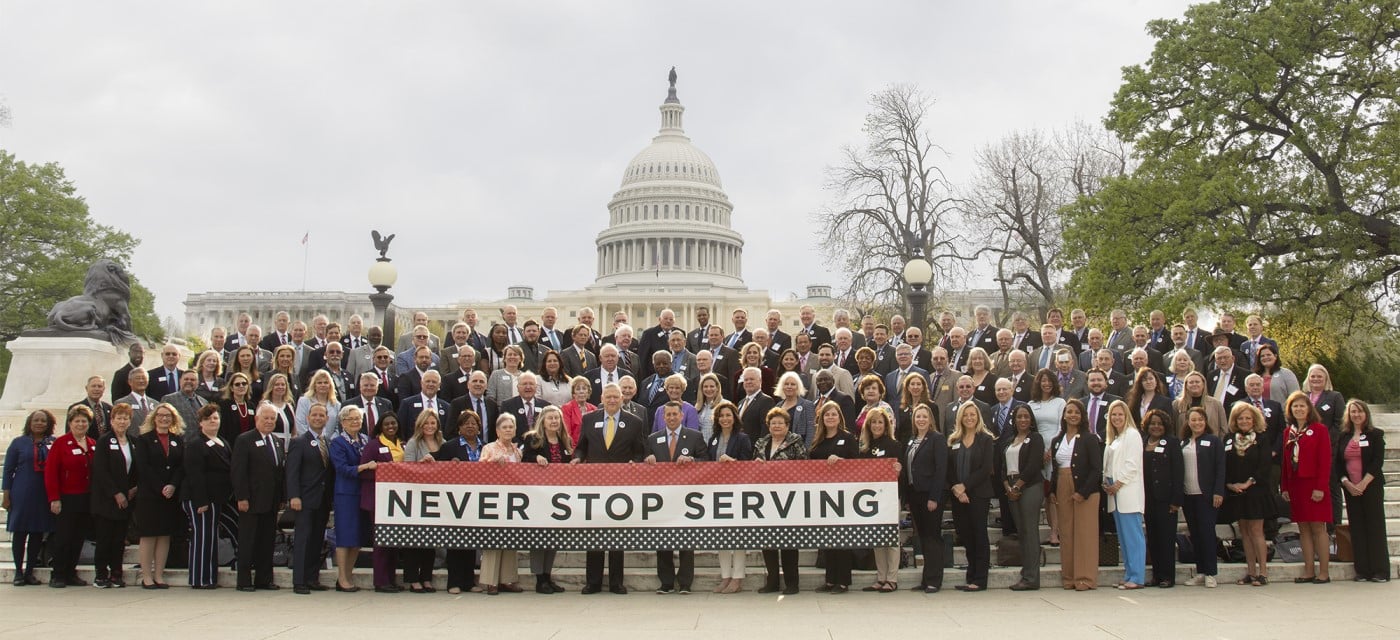
MOAA Federal Charter: Questions and Answers Senator Bill Nelson (D-FL) and Representatives Chris Van Hollen (D-MD) and Walter Jones (R-NC) have recently introduced legislation to award a Federal Charter to the Military Officers Association of America.
|
| Wounded and Families: Care Isn’t Seamless Yet. Three separate hearings this week focused on continuing problems experienced by wounded troops, veterans and their families despite two years of sweeping legislative and policy efforts to make transition seamless between DoD and VA. |
| Post-9/11 GI Bill Sign-Ups Begin Currently serving men and women, military retirees and veterans who have qualifying active duty service after September 10, 2001 can enroll in the new Post-9/11 GI Bill beginning today, May 1. |
| Disability Board to Loosen Restrictions Pentagon officials announced this week that the Physical Disability Board of Review (PDBR) will expand the criteria under which medical separatees can apply to have their records evaluated for upgrade to disability retirement status. |
MOAA Federal Charter: Questions and Answers
Senator Bill Nelson (D-FL) and Representatives Chris Van Hollen (D-MD) and Walter Jones (R-NC) have recently introduced legislation to award a Federal Charter to the Military Officers Association of America.
What’s the purpose behind the charter? Find out with MOAA’s Federal Charter Q and A’s.
Wounded and Families: Care Isn’t Seamless Yet.
The same issues were played out at a number of hearings this week in both chambers as the Armed Services and Veterans Affairs committees gathered information on just how effective wounded warrior policies and programs are between DoD and VA.
“Care continues to be a confusing maze of massive bureaucracies,” said one wounded warrior.
“They [DoD/VA] don’t tell you about the process, you just have to stumble on the information and care,” said a wounded warrior spouse.
One mother of a young disabled veteran stated that families are desperate for information, but would rather get counsel from other wounded families instead of DoD or VA.
Witnesses from DoD, VA and other federal agencies spoke to their leaderships’ commitment and intentions to continue making progress on transition issues. Wounded warriors and family members in attendance agreed that things are improving, but said the government is nowhere close to actually delivering seamless care and transition services.
MOAA is encouraged by the much-improved collaboration and cooperation between the DoD and VA secretaries, but believes far more needs to be done. And the first requirement is permanent statutory authority for a joint DoD/VA transition office staffed by senior, full-time DoD, service and VA personnel with responsibility and authority to develop joint policies, programs, new initiatives and oversight of the entire transition process from start to finish.
There are still too many disconnects between the services, DoD and VA, too little authority vested in a temporary joint office, too little emphasis on funding and staffing some of the joint activities, even for such basic things as offices and phones in some cases.
Further, there’s still too little regular collaboration between House and Senate Armed Services and Veterans Affairs and Appropriations Committee leaders and staffs. There are too many cases where real people are having real problems today, and too many people saying the short term fix is someone else’s responsibility, or that someone else isn’t doing their part, or arguing over which agency and which committee is going to pay for what. Working on solutions for 3 to 5 years down the road is fine, but far more close collaboration is essential to get real help to real people who needed it yesterday.
There are still too many significant breakdowns in records, care, compensation, benefits, caregiver support, and information once the wounded warrior and his or her family leave active duty.
Just as DoD and VA need a joint agency, Congress may need a joint subcommittee to enforce closer and more effective collaboration and take better care of those who bear the severe, personal consequences of our national wartime decision-making.
Post-9/11 GI Bill Sign-Ups Begin
The Department of Veterans Affairs announced this week that qualifying military personnel and veterans may enroll in the new Post-9/11 GI Bill program beginning today – May 1.
To qualify for the benefit, a servicemember, including members of the National Guard or Reserve, must have completed at least 90 days of active duty service after September 10, 2001 unless separated for medical reasons. Full benefits are awarded upon completion of an aggregate of 36 months of active duty service.
For those who have 36 months of qualifying active duty, the Post-9/11 GI Bill pays for:
- Tuition and fees up to the highest-cost public college or university in the respective state
- A monthly housing stipend payable at the E-5 with-dependents Basic Allowance for Housing (BAH) rate for the ZIP code of the school. The housing stipend is available only to veterans -- not active duty servicemembers -- who attend a physical campus full-time
- An annual book stipend of $1,000
Servicemembers or veterans with Montgomery GI Bill (MGIB) entitlement may make an irrevocable election for the Post-9/11 GI Bill program. But the VA cautions MGIB participants to weigh all aspects of this option. MOAA recommends that currently serving members consult an education counselor before making the decision. Veterans and military retirees with the MGIB should contact the VA before giving up those benefits for the new program.
MGIB participants who elect to transfer to the Post-9/11 GI Bill may use their benefits for vocational training, on the job training, apprenticeships and approved flight training instead of academic study, if they wish. Other participants can use the Post-9/11 GI Bill only for post-secondary study at schools that award traditional academic degrees (no vocational training).
A “yellow ribbon” feature of the new program allows enrollment in private colleges which have agreed with the VA to waive up to half the difference between the cost of tuition and fees at the private school and the highest amount the VA pays in that state. The Post-9/11 GI Bill will pick up the other half of the tuition-and-fees for participating private colleges.
The VA’s GI Bill website provides additional information and a link to the application form.
The VA will begin making payments directly to colleges and universities for enrolled veterans after Aug. 1, 2009.
Also this week, the Department of Defense announced “rules of engagement”(PDF) for currently serving men and women to transfer their benefits to spouses and/or children. Servicemembers must agree to complete the service required under the transfer policy.
In essence, anyone who is eligible for retirement on Aug. 1, 2009, or who has an approved retirement date after Aug. 1, 2009 and before July 1, 2010 will be able to transfer their benefits with no additional service requirement. There are also exceptions for servicemembers who will be mandatorily separated or retired due to service policy or statutory requirements.
Additional questions and answers on the Post-9/11 GI Bill are available on MOAA’s website.
Disability Board to Loosen Restrictions
Pentagon officials announce this week that the Physical Disability Board of Review (PDBR) will loosen current restrictions in two main areas in order to meet Congress’ original intent of the board.
The PDBR allows disabled servicemembers who were medically separated since September 11, 2001 an opportunity to have their disability ratings reviewed to ensure fairness and accuracy.
The acting director of the board, testifying at a Senate Armed Services Personnel Subcommittee hearing this week on the PDBR’s progress, said the Pentagon will soon make two major changes that increase the possibility of an applicant’s disability retirement upgrade.
Currently the board is limited to reviewing the specific condition(s) that made a member unfit for continued military service. The board will now expand its review to include all disability findings of a service during the medical evaluation process.
Additionally, any service-specific and DoD guidance at the time that conflicted with the VA Schedule of Rating Disabilities (VASRD) will be disregarded during the review. In many cases, the more restrictive DoD/service guidance caused the member to receive a lower disability rating than the VASRD would have provided.
MOAA previously identified these board shortfalls to congressional staffers and Pentagon officials, and we applaud DoD’s decision to make these adjustments and provide fairer evaluations for many who were previously separated with “low-balled” disability ratings.
Legislative Update Archives
Keep up to date on legislative action that affects you and your world. Subscribe to our weekly legislative update.